
Looking in my own mirror
By Thomas C. Keith, President
As the head of a large statewide grantmaking foundation, I connect and interact with many different people every day. Often, organizations like ours tend to feel good about what they do by viewing their grantmaking as the tool to effect change in society. By providing grant dollars for meeting basic needs and addressing the root causes of poverty, we feel like we are making a difference — and, at some level, we are.
But for me, personally, I feel white leaders in positions of influence and power must do more.
We can no longer stand by and be satisfied with the work we are doing and assume it is enough.
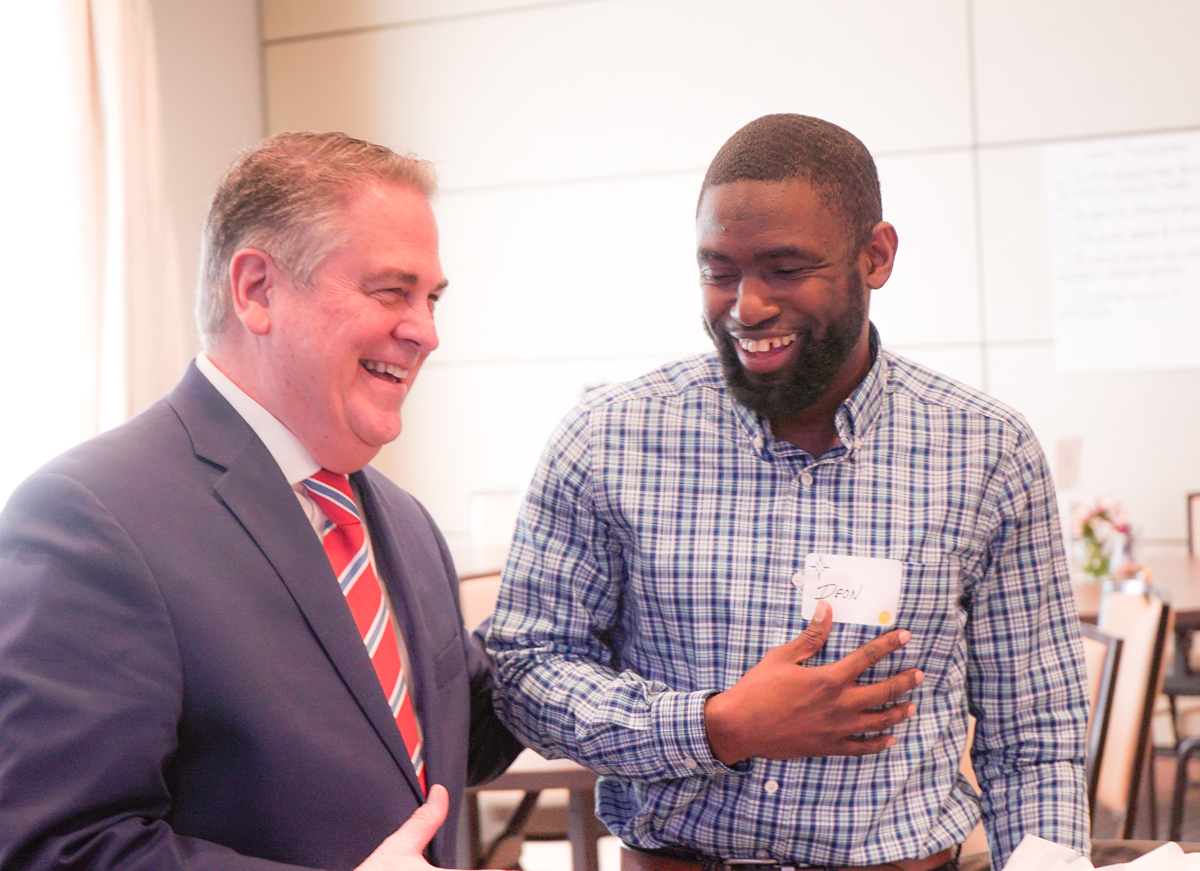
We can no longer pretend that racial inequity is “someone else’s problem.”
Growing up in rural West Virginia, there was no diversity of race in my community. In our perception, poverty and class affected white people and white people only. The culture in rural communities such as mine was very insulated. If there were racial prejudices or biases, they remained hidden. Even in my college years, it was not apparent to me that racism was occurring every day. It wasn’t that I was ignoring it, but it was not part of my world, so it was not real to me. Reading about it in the newspaper or watching something on television did not make it personal, and therefore it was not a factor in my daily life, even when I joined the workforce.
When I began my work at the Sisters of Charity Foundation is when it really hit me. People in South Carolina (and this is not unique to South Carolina) were treated differently and it was obviously along racial lines. People of color are most affected by poverty here and it has been that way for a long time.
The question to myself became, “What can I do about it?” Providing grant dollars to these communities is helpful, but it would never be enough.
It is also important to build trust among the staff and board. We must trust each other if we are going to have honest discussions. Then, we have to commit to a plan for change. And, proactive change starts with getting your own house in order.
By starting a Diversity, Equity, Inclusion and Belonging (DEI&B) task force among our staff, we were able to begin the process with transparency, honesty and trust. We read articles, learned from each other, watched videos and became more comfortable with having challenging conversations. Then, our board became part of the learning and growing process. They joined in for open and honest discussions about racial inequities and DEI&B matters. Our entire organizational culture began to evolve to the point that we chose to make it a hallmark of our strategic intentions. We were not just talking about it, we were doing something about it.
We now have specific goals for the Foundation around DEI&B. We created a director of DEIB position and hired the amazing Ericka Wooten. We have an active DEIB Committee of the Board that meets regularly, and addresses matters of importance to the Foundation. For example, the DEI&B Committee has recommended certain hiring practices and protocols for the Foundation. We have adopted those recommendations. They have recommended certain governance issues when attempting to recruit new trustees and onboarding them into our culture.
We continue to learn about the nuances of diversity, equity, inclusion and belonging and how we can make ourselves a best practice model for others to follow.
This work cannot be a sprint. There is no true way to fast-track things. Investing in DEI&B must be atmospheric and requires cultural change. Just like unlocking the door to come into the office every day, DEI&B must be as routine and consistent as that process is.
As a white leader, there are many things I cannot do, but I can proactively and intentionally move our organization in a direction of researching and understanding racial injustices and taking any actions within our power to make change happen.
I want to challenge other white leaders to get involved in this work. We play an important role in bringing about and elevating the need for and importance of racial equity. In partnership and solidarity with people of color we can make real progress in moving the work of racial justice forward.
I may never be able to do enough as a leader, but if I do nothing, nothing will ever change —at least not in my world, which is a world filled with problems, but also many opportunities.